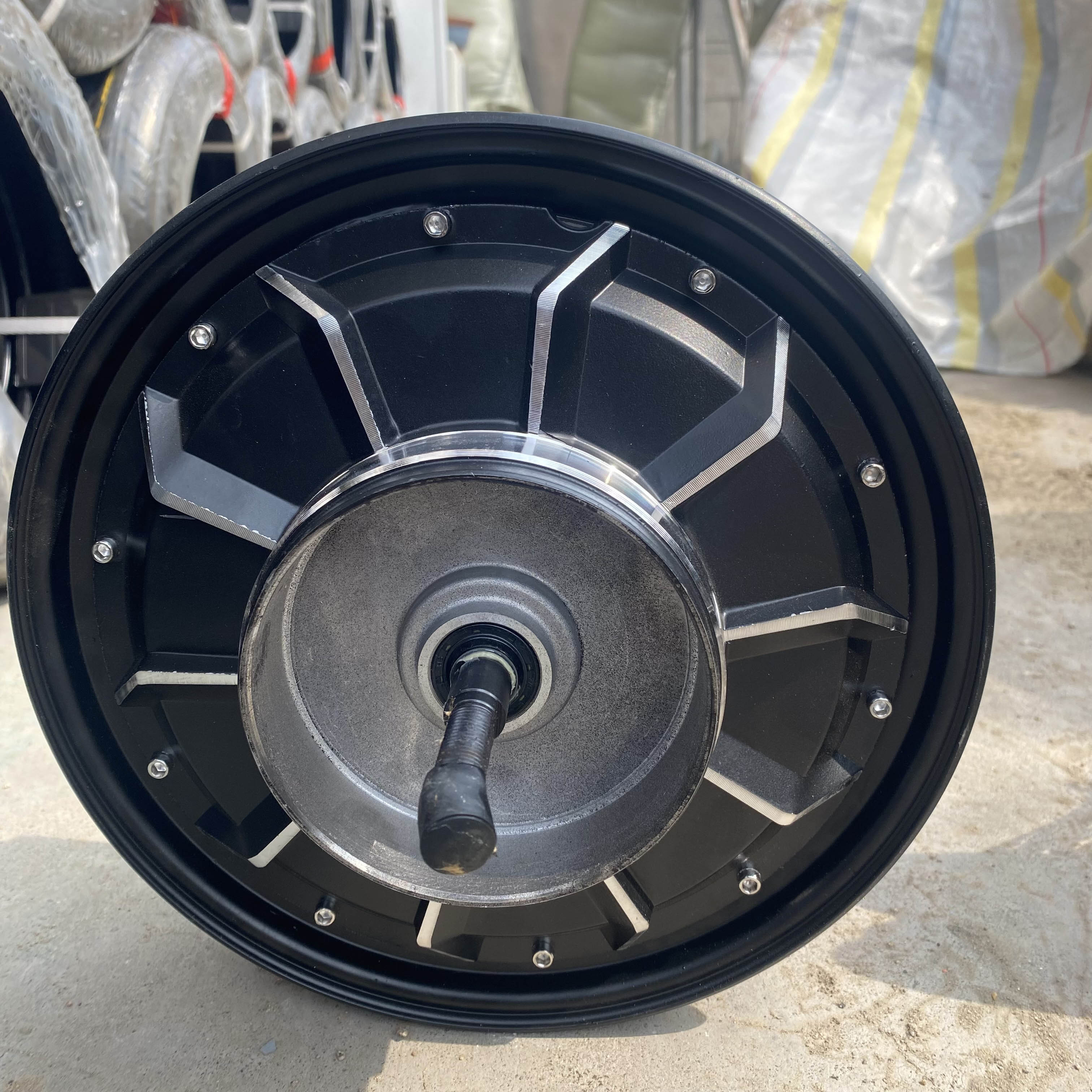
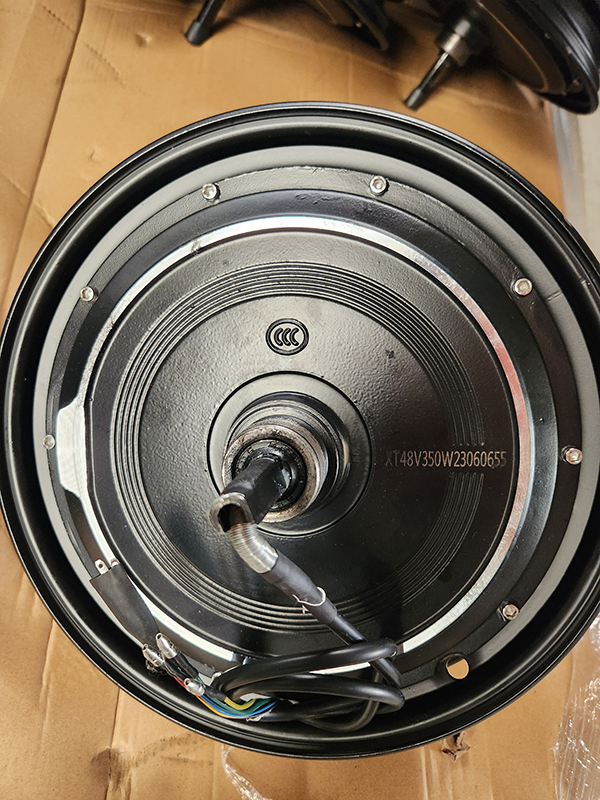
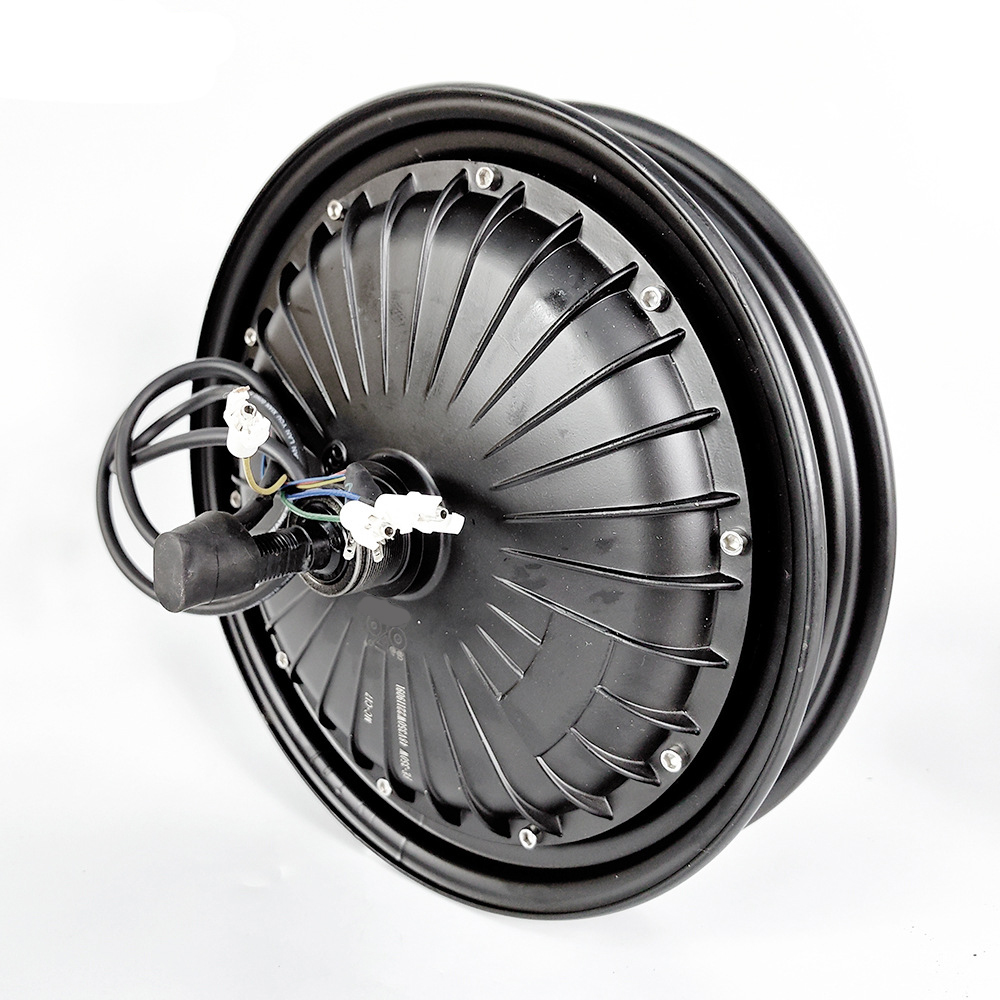
- After turning off the power, inspect the fixing bolts that attach the motor to the frame—pay special attention to the rear wheel motor.
- Examine the motor wire connectors (including the power cord and Hall wire) to see if they are loose or have poor contact.
- Check the gap between the brake system and the motor (e.g., whether the disc brake pad is rubbing against the motor housing).
- Loose bolts lead to motor vibration and abnormal noise.
- Poor wire contact causes current-related humming.
- Friction between brake components and the motor.
- Tighten the bolts with a torque wrench. Refer to the vehicle manual for the correct torque value (usually 25-35N·m).
- Reconnect the wires and wrap them with insulating tape to ensure no oxidation at the connector points.
- Adjust the brake clearance and replace any worn brake parts.
Fixing bolts, Wire connector, Brake clearance
- Manually rotate the motor (with the power off) to feel for jamming or unusual noises.
- Inspect the bearings at both ends of the motor shaft: shake the motor shaft by hand to check for looseness (excessive play).
- For gear motors, check if the gearbox is faulty—this requires removing the motor end cover.
- Bearings are worn, lack lubrication, or have rust.
- Gears are worn or poorly meshed (common in brushed motors or reduction motors).
- Foreign objects (e.g., sand, metal shavings) are inside the motor.
- Replace the bearings with the same model. Pay attention to the bearing’s sealing grade; waterproof 6002/6003 series bearings are recommended.
- Clean the gearbox and add special gear oil. If gears are severely worn, replace the entire gear set.
- Disassemble the motor to remove foreign objects, then reseal it to ensure waterproofing.
Bearing, Gear box, Waterproof seal
- Turn on the power, twist the throttle, and listen to see if the abnormal noise changes with speed (e.g., no noise at low speed, but noise at high speed).
- Use a multimeter to test the Hall sensor (motor phase wire) for abnormal signals.
- Check if the controller’s output current is stable—this requires connecting a diagnostic tool.
- Damaged or misaligned Hall sensor, which disrupts the motor’s phase sequence.
- Controller failure, leading to fluctuating output current and motor jitter/noise.
- Short circuit or grounding in the motor winding (rare, but usually accompanied by overheating).
- Replace the Hall sensor, ensuring it matches the motor’s phase angle (common angles are 60°/120°).
- Replace the controller with one of the same specifications; ensure the voltage and power match the motor.
- Severely damaged windings require professional repair; replace the motor if the damage is irreparable.
Hall sensor, Controller, Motor winding
- Inspect the motor housing for collision marks (e.g., scratches from hitting a stone with the bottom of the motor).
- Confirm if the e-bike has been ridden in rainy weather or waterlogged roads recently—water ingress can cause internal rust.
- Review the motor maintenance records (e.g., whether the lubricating grease has not been replaced for a long time).
- Deformed motor housing presses against internal components.
- Water ingress leads to rust on bearings or windings.
- Dry lubricating grease causes mechanical friction.
- Repair or replace the motor housing to ensure no internal components are squeezed.
- Disassemble the motor to dry it, replace rusted parts, and enhance waterproofing (apply sealant).
- Add special motor lubricating grease regularly (every 3,000km or 6 months).
Lubricating grease, Water ingress, Maintenance record
- Power-Off Operation: Always disconnect the battery before performing any mechanical checks (e.g., removing bolts, rotating the motor) to avoid electric shock or accidental motor startup.
- Professional Boundary: If issues like "motor winding short circuit" or "severe gearbox wear" are identified, guide customers to contact professional maintenance personnel. Unprofessional operations may cause secondary damage (you can attach contact information for overseas partner repair shops).
- After-Sales Adaptation: For cross-border customers, add a video QR code (linking to tutorials on motor disassembly or bolt tightening) to reduce language comprehension barriers.

 CKD vs CBU: The Smart Way to I